






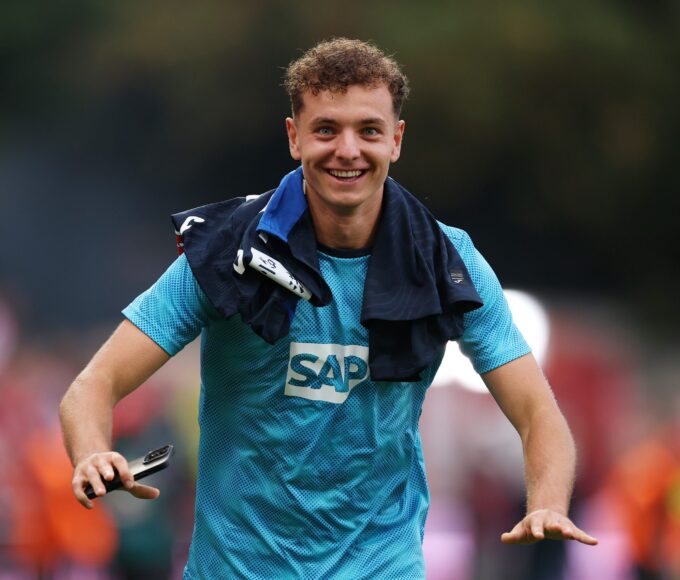


The year 1995 etched an indelible mark in the annals of football history, not just for the breathtaking talent it showcased, but for a singular, groundbreaking achievement that transcended continents and shattered long-standing perceptions. It was the year George Manneh Oppong Weah, a Liberian phenom, ascended to the pinnacle of individual footballing glory, claiming the coveted Ballon d’Or. His victory was more than just an award; it was a powerful statement, a beacon of hope, and a testament to the universal appeal and potential of African football. Weah’s journey from the dusty pitches of Monrovia to the grand stages of European football, culminating in this historic win, remains an inspiring saga of talent, resilience, and unwavering dedication.
The Road to Glory: Weah’s European Ascent
George Weah’s path to becoming a global football icon was a testament to raw talent honed through relentless effort and a series of strategic moves across European clubs that allowed his star to shine ever brighter.
Humble Beginnings and African Roots
Born in Clara Town, a slum in Monrovia, Liberia, Weah’s early life was far removed from the glamour of professional football. His passion for the game, however, was evident from a young age. He honed his skills on the unforgiving streets and local pitches, quickly earning a reputation for his explosive pace, powerful physique, and an uncanny ability to score goals. His professional career began in Liberia with clubs like Mighty Barrolle and Invincible Eleven, where his dominance quickly caught the eye of scouts.
Monaco and PSG: Making a Name in France
Weah’s move to Europe in 1988, orchestrated by the legendary Arsène Wenger, then manager of AS Monaco, marked a pivotal turning point. Wenger recognized Weah’s immense potential, often referring to him as a “miracle.”
AS Monaco (1988-1992): Under Wenger’s tutelage, Weah blossomed. He quickly adapted to European football, scoring 47 goals in 103 appearances and winning the Coupe de France in 1991. His performances announced his arrival on the European stage.
Paris Saint-Germain (1992-1995): Weah’s transfer to PSG further elevated his profile. He became a crucial player for the Parisian giants, leading them to a Ligue 1 title in 1994 and two Coupe de France trophies. It was during his time at PSG that his reputation as a world-class striker solidified, particularly through his dazzling displays in the UEFA Champions League. In the 1994-95 Champions League campaign, he was the top scorer with 7 goals, showcasing his ability to perform on the biggest stages.
Transition to AC Milan: The Apex of His Club Career
In the summer of 1995, AC Milan, one of Europe’s most decorated clubs, secured Weah’s signature. This move placed him at the heart of one of the continent’s most competitive leagues, Serie A, and set the stage for his most significant individual accomplishment. His arrival in Italy coincided with a period where he was already recognized as one of the world’s most dangerous forwards.
The Unforgettable Year: 1995 Ballon d’Or Triumph
The year 1995 stands as the zenith of George Weah’s footballing career, a period where his individual brilliance and team success converged to secure his place in history.
Dominance with AC Milan and Individual Brilliance
Upon joining AC Milan, Weah immediately made an impact, adapting seamlessly to the tactical demands of Italian football. His blend of speed, strength, and technical skill made him a nightmare for defenders.
Serie A Impact: In his debut season with AC Milan, Weah was instrumental in their Serie A title victory, scoring 11 goals. His ability to create chances, hold up the ball, and score crucial goals was pivotal for the Rossoneri.
Key Performances: Weah’s performances were consistently outstanding. One of his most iconic goals came against Verona, where he dribbled the entire length of the pitch, evading multiple defenders, before slotting the ball into the net – a moment that encapsulated his extraordinary talent. His influence wasn’t just in goals but in his overall contribution to team play and his ability to inspire those around him.
The Significance of the Award
The 1995 Ballon d’Or was particularly significant for several reasons:
First Non-European Winner: Until 1995, the Ballon d’Or was exclusively awarded to European players. That year, France Football changed the eligibility criteria to include all players from clubs affiliated with UEFA. Weah’s win under these new rules was a powerful statement about the global nature of football talent.
FIFA World Player of the Year: In addition to the Ballon d’Or, Weah also won the FIFA World Player of the Year award in 1995, making him the first and only African player to achieve both prestigious accolades in the same year. This cemented his status as the undisputed best player in the world.
- Overcoming Football Giants: Weah beat out formidable contenders like Jürgen Klinsmann (second place) and Jari Litmanen (third place), further highlighting the magnitude of his achievement in a highly competitive era of football.








Leave a comment