











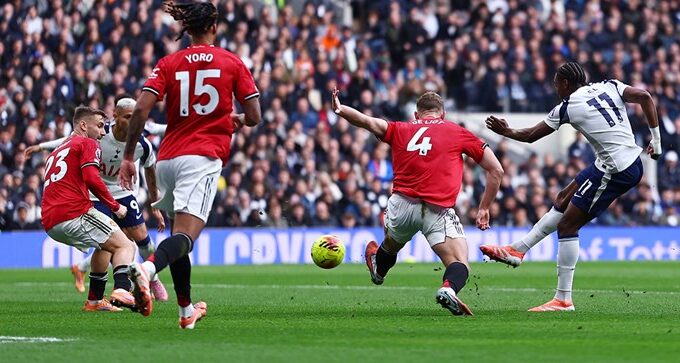









The thrill of sports lies not just in watching the game unfold, but also in the anticipation of its outcome. For many enthusiasts, predicting the result of a football match adds an extra layer of excitement, turning passive spectators into active analysts. The “win draw win” (also known as 1X2) market is arguably the most popular form of match prediction, offering three distinct possibilities: a home win, a draw, or an away win. Mastering these predictions requires more than just a gut feeling; it demands a blend of rigorous analysis, data interpretation, and an understanding of the intricate factors that shape a match. This comprehensive guide will delve into the strategies, tools, and insights necessary to elevate your win draw win match predictions from guesswork to informed foresight.
Understanding Win Draw Win (1X2) Predictions
The Win Draw Win market is the bedrock of sports betting and match prediction, offering a straightforward yet challenging proposition. It’s about forecasting the final outcome of a match after regular time (typically 90 minutes plus injury time).
What is 1X2 Betting?
1 (Home Win): You predict that the home team will win the match.
X (Draw): You predict that the match will end in a tie.
2 (Away Win): You predict that the away team will win the match.
This simplicity is precisely why it’s so popular, but don’t let it fool you; accurately predicting one of three outcomes consistently is a complex endeavor. Unlike markets with only two outcomes (e.g., over/under goals), the draw option significantly alters the probability landscape.
Why Are Win Draw Win Predictions So Popular?
Simplicity and Familiarity: It’s the most natural way to think about a match outcome.
Higher Odds for Draws: Draws often carry higher odds than home or away wins, attracting those looking for bigger payouts.
Foundation for Other Markets: Understanding 1X2 is fundamental to grasping more complex betting markets.
Actionable Takeaway: Before diving deep, ensure you fully grasp the basic concept of 1X2. It’s the foundation upon which all advanced prediction strategies are built.
The Science Behind Accurate Win Draw Win Predictions
Making informed win draw win predictions is less about luck and more about a systematic, data-driven approach. It involves dissecting various elements that collectively influence a match’s trajectory.
In-Depth Data Analysis
Successful predictors rely heavily on historical and current data to identify patterns and trends.
Recent Form: Look beyond just wins and losses. Analyze goal difference, shots on target, possession, and clean sheets over the last 5-10 games. A team with three draws and two narrow losses might be in better form than a team with two wins against weaker opposition and three heavy defeats.
Head-to-Head Records: Some teams simply have a psychological edge or tactical superiority over others, regardless of current form. Review the last 5-10 encounters between the two teams.
Home vs. Away Performance: Many teams perform significantly better at home due to crowd support, familiarity with the pitch, and reduced travel fatigue. Conversely, some teams are adept at playing away, often adopting counter-attacking tactics.
Key Player Statistics: Goals, assists, defensive contributions, and disciplinary records of star players can be crucial.
Practical Example: If Team A has won 80% of their home games this season, and Team B has lost 70% of their away games, a home win for Team A becomes a more plausible prediction, provided other factors align.
Team News and Managerial Factors
The human element in football is often as crucial as the statistics.
Injuries and Suspensions: The absence of key players (e.g., a prolific striker, a commanding center-back, or a creative midfielder) can drastically weaken a team. Monitor official club news and reliable sports journalists.
Squad Depth and Rotation: Consider whether a team has upcoming important fixtures (e.g., Champions League) that might lead to squad rotation, potentially fielding a weaker starting XI.












Leave a comment